
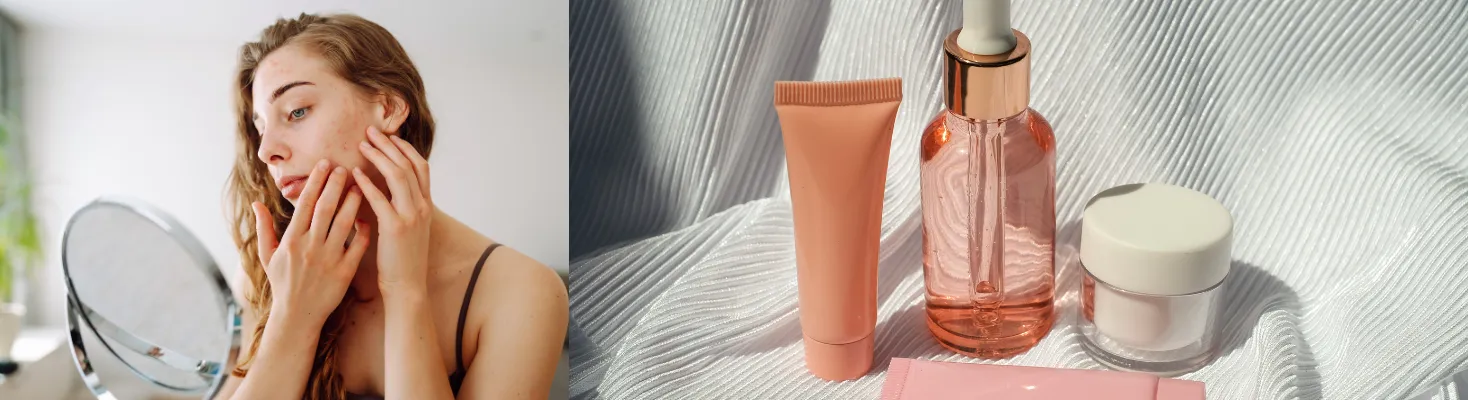
You wash your face carefully, use serums, moisturise and follow a well-thought-out skincare routine – yet spots and breakouts keep appearing.
Sound familiar? You are far from alone.
Acne is one of the most common skin problems and affects both teenagers and adults. Many people believe the right skincare products are always the solution, but the truth is that acne is often affected by several different factors. Even if you have a good skincare routine, other causes may be behind your recurring breakouts.
In this post, we go through eight common reasons why you still get acne – and what you can do to help your skin.
1. Hormonal changes
Hormones are one of the most common causes of acne in both women and men.
Breakouts can occur in connection with:
- Puberty
- The menstrual cycle
- Pregnancy
- Menopause
- Hormonal contraceptives
Hormonal acne often appears along the jawline, the chin and the lower part of the face.
2. You are over-treating your skin
Many people think the skin gets better the more products they use.
In fact, too many active ingredients – such as acids, retinol and exfoliating products – can irritate the skin and weaken the skin barrier.
A damaged skin barrier can lead to:
- Redness
- Dryness
- Increased sensitivity
- More breakouts
Sometimes a simpler skincare routine is the best option.
3. Your skincare products do not suit your skin type
A product that works for someone else does not always suit you.
Products that are too rich or pore-clogging can contribute to blocked pores, while drying products can make the skin produce more sebum to compensate.
An individual skin analysis can help you find products that suit your skin.
4. Stress affects the skin more than you think
Long-term stress can affect the body's hormone balance and therefore also the skin.
Many people find their acne gets worse during periods of:
- A lot of work
- Studying
- Lack of sleep
- High mental load
Good recovery and stress management are therefore important parts of healthy skin.
5. Diet can play a role
There is no diet that cures acne, but research suggests that certain foods can affect the skin in some people.
Examples discussed in the research are:
- Foods with a high glycaemic index
- Large amounts of sugar
- Some dairy products
How the skin is affected, however, varies between individuals.
6. You touch your face more often than you think
Your mobile phone, hands, make-up brushes and pillowcases come into contact with your skin every day.
Dirt, oil and bacteria can collect on these surfaces and contribute to clogged pores.
Small habits can make a big difference, for example:
- Washing make-up brushes regularly
- Changing pillowcases often
- Cleaning your mobile phone
- Avoiding picking at spots
7. It may be something other than acne
Not all rashes and spots are acne.
Skin problems such as rosacea, perioral dermatitis or inflamed hair follicles can cause symptoms similar to acne but require different treatment.
If your skin does not improve despite the right skincare, it may be wise to book a professional skin assessment.
8. Skincare is not always enough
Skincare products mainly work on the surface of the skin.
With more pronounced or recurring acne, professional treatments can sometimes complement daily skincare.
Depending on the skin's needs, the following treatments may be relevant, for example:
- Chemical peel
- LED light therapy
- Individually tailored medical skincare programmes
Which treatment is most suitable is always decided after an individual skin assessment.
What can you do if your acne does not go away?
If you have had acne for a long time despite a well-planned skincare routine, it may be time to look at the whole picture.
A professional skin analysis can help identify underlying causes and create a treatment plan adapted to your skin type, your goals and your needs.
The earlier the right measures are taken, the greater the chance of reducing the risk of long-term problems and acne scars.
Why do many people choose Nordic Skin Klinik for acne treatment?
No two skins are alike, which is why there is no one-size-fits-all solution for acne.
At Nordic Skin Klinik, every treatment starts with a thorough skin analysis where skin type, skin condition, lifestyle and individual goals form the basis of the treatment plan. The focus is not only on treating visible spots but also on identifying underlying factors that may contribute to acne and creating a treatment plan adapted to each client's needs.
Depending on the skin's needs, the treatment can include chemical peels, LED light therapy, medical skincare and individually tailored treatment plans. If acne has led to acne scars or uneven skin texture, microneedling may be recommended once the active inflammation has healed.
With a focus on safety, continuous professional development and natural results, Nordic Skin Klinik combines medical expertise with a personal approach to help every client achieve healthier, clearer and more balanced skin.
Frequently asked questions (FAQ)
1. Why do I get acne even though I wash my face every day?
Acne is not caused by dirt alone. Hormones, genetics, stress, sebum production and other factors can also affect the skin.
2. Can stress cause acne?
Stress can affect hormone balance and contribute to acne getting worse in some people.
3. Does it help to wash your face more often?
No. Too much cleansing can irritate the skin and weaken the skin barrier, which can sometimes make the problems worse.
4. Can diet affect acne?
In some people, diet can play a role, but the link varies between individuals and there is no diet that cures acne.
5. When should I seek professional help for acne?
If your acne is recurring, severe or does not improve despite an adapted skincare routine, it can be a good idea to book a skin analysis or consultation.
6. Can professional treatments help with acne?
Yes, depending on the condition of the skin, treatments such as chemical peels, LED light therapy or other individually tailored treatments may be relevant after a professional assessment.
7. Can acne cause scars?
Yes. Untreated or severe acne can increase the risk of acne scars. Early advice and the right treatment can help reduce the risk of permanent marks.