
Botox for Migraine & Tension Headaches
Migraine and tension headaches can be both painful and limiting in everyday life. For many, they mean recurring episodes of intense headache, often combined with sensitivity to light, nausea and muscle tension. When traditional pain relief does not work well enough, Botox can be a safe and effective solution to reduce both the frequency and the intensity of the headaches.
Your first visit is a doctor’s assessment where we go through your symptoms and suggest the right treatment.
Book a consultationWhat are migraine and tension headaches?
Migraine and tension headaches can be both painful and limiting in daily life. For many, it means recurring episodes of intense headache, often combined with sensitivity to light, nausea and muscle tension. When traditional pain relief does not work well enough, Botox can be a safe and effective solution to reduce both the frequency and intensity of the headaches.
Botox is an approved medical treatment for chronic migraine and tension headaches. By being injected into specific muscles that contribute to the headache, Botox can block the pain signals and reduce the muscle tension that often triggers or worsens the headache. The treatment is well proven, gentle and gives long-lasting relief without affecting other parts of the body.
What are migraine and tension headaches?
Migraine and tension headaches are more than just an ordinary headache – they are conditions that can significantly affect quality of life. For many, they mean intense, recurring episodes of throbbing pain, often accompanied by sensitivity to light and sound, nausea and dizziness. Some people also experience aura, a neurological phenomenon where vision is affected by blurred spots, zigzag patterns or temporary loss of vision before a migraine attack.
Migraine occurs when blood vessels in the brain widen and cause inflammation, which triggers pain signals that spread through the nervous system. This can be set off by various factors, such as stress, hormonal changes, lack of sleep or specific foods. Tension headaches, on the other hand, are often caused by overactive and tense muscles in the face, neck and shoulders, leading to a persistent, pressing pain that can last for hours or days.
For those who suffer from chronic migraine or tension headaches, daily life can be severely affected. The pain can make it hard to work, take part in social situations or do simple daily activities. Many feel they have to plan their lives around their headache episodes, which can lead to increased stress, fatigue and isolation. Warmer temperatures, bright light and loud noise can worsen the symptoms, making even an ordinary day outdoors feel challenging.
Botox is an approved medical treatment for chronic migraine and tension headaches and is used to block the nerve signals that cause pain and tension. By being injected into specific areas of the head, face and neck, Botox can help reduce the frequency and intensity of the headaches, giving a better and more stable daily life without constant pain attacks.
How does the treatment work?
Botox works by blocking the nerve signals that stimulate muscle contractions, which makes tense muscles relax and dampens pain signals. This reduces the overactivity that often contributes to migraine and tension headaches.
Who can be treated?
Botox for migraine is recommended for people with chronic migraine, defined as at least 15 headache days per month, of which at least 8 are migraine days. The treatment can also help people with tension headaches where muscle tension in the face, neck and shoulders contributes to the pain.
Botox is a safe and well-proven treatment method that can give great relief if you suffer from recurring headaches. At Nordic Skin Klinik we use medical expertise and careful adjustment to create a tailored treatment programme that fits your needs.
Benefits of Botox for migraine and tension headaches
- Reduces the frequency and intensity of migraine and tension headaches.
- Relieves muscle tension and pain in the neck and head.
- An effective treatment that can give long-lasting relief for up to 3–6 months.
- A non-invasive treatment that does not require surgery or long recovery.
Take the first step towards a pain-free daily life and book your consultation today.
Is the treatment right for you?
Botox for migraine is recommended for people with chronic migraine, defined as at least 15 headache days a month, of which at least 8 days are migraine. The treatment can also help people with tension headaches where muscle tension in the face, neck and shoulders contributes to the pain.
Indications for Botox for migraine & tension headaches
- You suffer from chronic migraine or recurring tension headaches.
- You want a non-medicinal solution to relieve headaches and pain.
- You are looking for a long-lasting treatment to reduce the intensity and frequency of headaches.
When will I see results and how long do they last?
Quick facts about Botox for migraine and tension headaches
Treatment time: 30 min · Result: 4 weeks · Risks and side effects: mild redness / swelling · Recovery time: 0 – back to daily life straight away! · Duration: 3–6 months · Good to know: CE-marked – approved – safe product
Treatment interval
- The effect starts to be noticeable within 7–14 days after the treatment.
- Most people experience a significant reduction in the number of headache days per month.
- The effect lasts 3–6 months, after which the treatment can be repeated if needed.
How the treatment works
We go through your headaches, symptoms and medical history to see if Botox is right for you.
The doctor chooses which areas to treat, for example the forehead, glabella, temples, neck and back of the head.
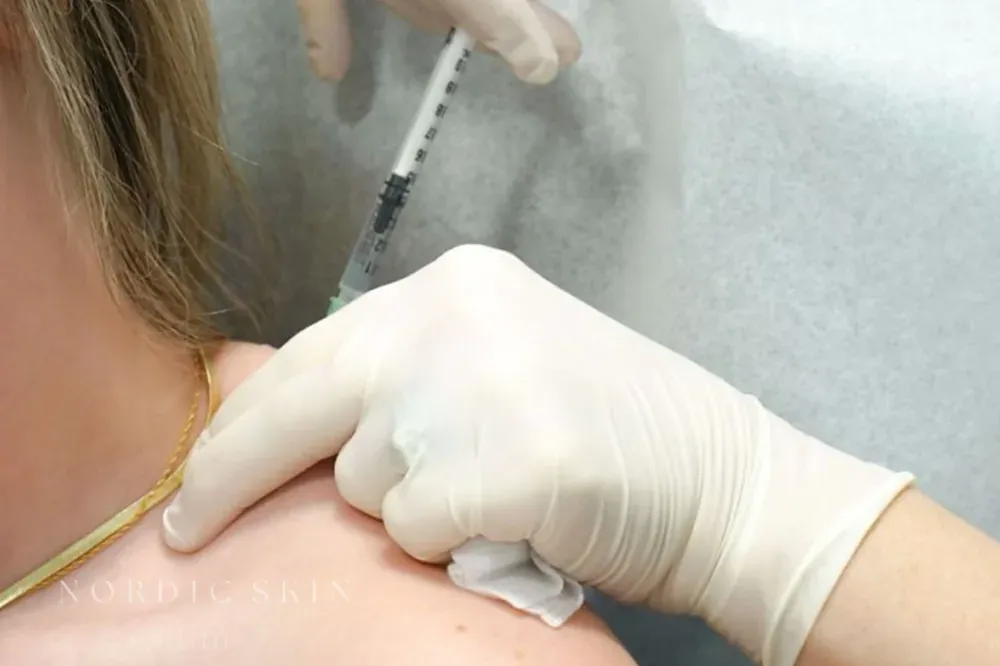
Botox is injected with a fine needle into selected muscles. The treatment takes about 30 minutes.
We follow up the effect and plan the next treatment if needed.
Risks, side effects and aftercare
Risks and side effects
- Botox is a safe treatment for migraine and tension headaches when performed by certified specialists. Common side effects are mild and temporary, including:
- Mild redness or swelling at the injection site.
- A temporary headache after the treatment, which disappears within a few days.
- Very rarely, mild side effects such as temporary weakness or numbness can occur in the treated area.
Things to consider after the treatment
- Avoid massaging or pressing on the treated area during the first 24 hours.
- Avoid intense exercise, sauna and hot baths during the first 24 hours.
- The effect builds up gradually. Full effect is reached within about two weeks.
Transparent prices, no surprises
The final treatment plan and price are confirmed at the consultation. Read the booking and cancellation terms before booking.
Treatment for migraine / tension headache
fr. 3 900 krBookMedical consultation SEK 850 · Prices are taken from the clinic's price list and apply until further notice. Booking via our online booking.
Questions about Botox for migraine & tension headaches
How quickly does Botox for migraine work?
The effect starts within 7–14 days and the full effect is reached within about two weeks.
How long does the effect last?
The effect lasts 3–6 months, after which the treatment can be repeated.
Who can have the treatment?
It is recommended for chronic migraine (at least 15 headache days per month, of which at least 8 are migraine days) and can also help with tension headaches.
Where is Botox injected?
Common areas are the forehead, glabella, temples, neck and shoulders, and the back of the head.
Are there side effects?
Common side effects are mild and temporary, such as slight redness or swelling and a temporary headache. Very rarely, temporary weakness or numbness can occur.
See also
Not sure which treatment?
At the medical consultation, the doctor makes an assessment and goes through which options suit you.
Book a consultationMeet your doctor
Dr Alex Sajjad
Specialist physician
Specialist in general medicine, certified in aesthetic injectable treatments. Practitioner and trainer with many years of experience in aesthetic medicine.
- IVO-registered care provider
- Patient insurance through If
- Licensed physician · Certified in aesthetic injectable treatments
- Barkarbyvägen 76, Järfälla