
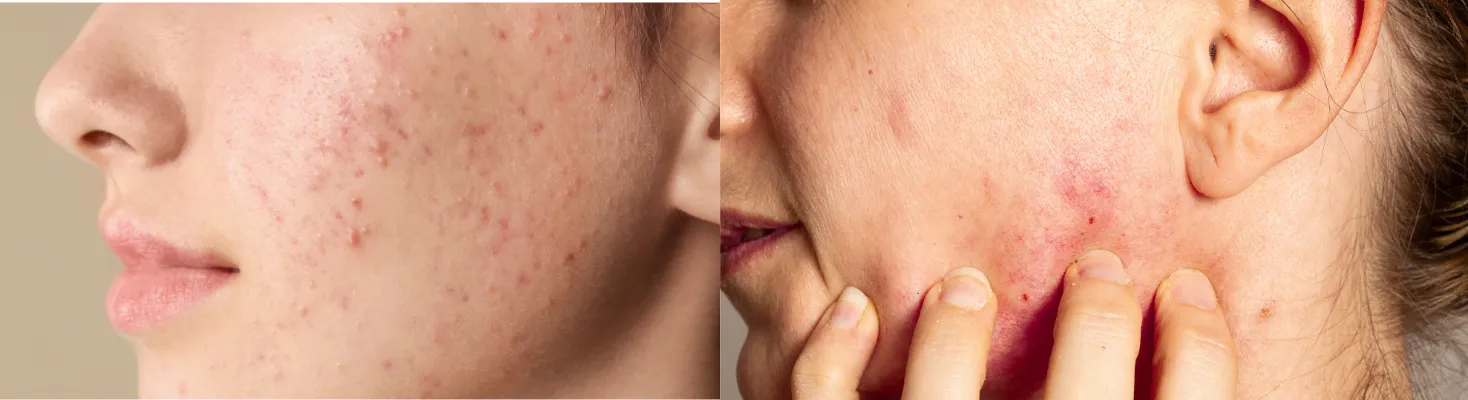
Many people think all red rashes or spots are acne. In fact, many who think they have acne actually have rosacea – a chronic inflammatory skin condition that requires a completely different kind of treatment.
Even though acne and rosacea can look similar, they have different causes, symptoms and treatment methods. If you treat the wrong skin condition, there is a risk the problems get worse instead of better.
In this post, we go through the most important differences between acne and rosacea, how to recognise the symptoms and how to choose the right treatment for your skin.
What is acne?
Acne is one of the world's most common skin conditions and affects both teenagers and adults.
Acne occurs when hair follicles are clogged with sebum, dead skin cells and bacteria, leading to inflammation.
Common signs of acne are:
- Blackheads and whiteheads
- Papules (small red bumps)
- Pustules (pus-filled spots)
- Nodules or cysts in more severe acne
- Oily skin
- Acne scars or pigmentation marks after spots
Acne most often appears on:
- The face
- The chest
- The back
- The shoulders
What is rosacea?
Rosacea is a chronic inflammatory skin condition that mainly affects the central part of the face.
Unlike acne, rosacea is not caused by clogged pores. Instead, it is about increased sensitivity in the skin and changes in the skin's blood vessels.
The exact cause is not fully known, but heredity, environmental factors and an overactive immune response are thought to play an important role.
Common symptoms of rosacea are:
- Persistent redness of the face
- Visible blood vessels
- Red bumps that can look like acne
- Flushing or blushing easily
- A stinging or burning sensation
- Sensitive skin
- Dry or irritated skin
Rosacea most often affects:
- Cheeks
- Nose
- Chin
- Forehead
Acne or rosacea – how do you tell the difference?
| Acne | Rosacea |
| Blackheads are common | Blackheads do not occur |
| Increased sebum production | Persistent redness and flushing |
| Can appear on the face, back, chest and shoulders | Mainly in the centre of the face |
| Often starts in the teenage years | Usually starts after the age of 30 |
| Clogged pores | Visible blood vessels |
| The skin is often oily | The skin is often sensitive or dry |
One of the clearest differences is that rosacea does not cause blackheads, while blackheads are a common sign of acne.
Can you have both acne and rosacea?
Yes.
It is possible to have both acne and rosacea at the same time.
Some people have oily, acne-prone skin while also experiencing the redness and sensitivity typical of rosacea.
As the skin conditions can overlap, it is important to get a correct assessment before starting a treatment.
Common triggers for rosacea
Rosacea can be made worse by several factors in everyday life, for example:
- Sun
- Hot drinks
- Spicy food
- Alcohol
- Stress
- Cold or heat
- Intense exercise
- Certain skincare products
Knowing your own triggers can help reduce the problems.
What causes acne?
Acne is affected by several different factors, including:
- Increased sebum production
- Clogged pores
- Acne bacteria
- Hormonal changes
- Heredity
- Certain medicines
- Stress
- Skincare products that do not suit your skin type
Often several factors interact at the same time.
That is why the right diagnosis is important
Many products developed for acne contain ingredients that reduce sebum production and exfoliate the skin.
For people with rosacea, such products can instead irritate the skin and weaken the skin barrier.
In the same way, skincare that only focuses on sensitive skin is not always enough to treat acne.
A correct assessment of the skin's needs is therefore crucial for choosing the right treatment.
Treatment options
Which treatment is most suitable depends on the skin condition, its severity and individual needs.
For acne, treatment can include, among other things:
- Medical skincare
- Chemical peel
- LED light therapy
- Prescription medicines when appropriate
For rosacea, treatment often focuses on:
- Reducing inflammation
- Strengthening the skin barrier
- Identifying and avoiding individual triggers
- Using gentle skincare
- Vascular laser in selected cases
A professional skin analysis helps determine which treatment is most suitable for your skin.
How to help your skin in everyday life
Whether you have acne or rosacea, good skincare routines can make a big difference.
Remember to:
- Cleanse your skin gently morning and evening.
- Use sunscreen with SPF every day.
- Avoid over-exfoliating.
- Choose skincare products that suit your skin type.
- Keep your skin hydrated.
- Avoid squeezing or picking at spots and rashes.
- Seek professional help if the problems do not improve.
Consistent skincare usually gives better results than constantly switching products.
Frequently asked questions (FAQ)
1. How do I know if I have acne or rosacea?
Blackheads usually suggest acne, while persistent redness, flushing easily and visible blood vessels are more common with rosacea.
2. Can rosacea cause spots?
Yes. Rosacea can cause red bumps and pus-filled spots that look like acne, but unlike acne, no blackheads occur.
3. Can acne products make rosacea worse?
Yes. Strong exfoliating products or powerful acne treatments can irritate sensitive skin and make rosacea worse in some people.
4. Can you have both acne and rosacea at the same time?
Yes. Some people have both acne and rosacea, which makes a professional skin assessment especially important.
5. Which treatments are used for acne?
Depending on the skin's needs, treatment can consist of medical skincare, chemical peels, LED light therapy or prescription medicines.
6. Can rosacea be cured?
Rosacea is usually a chronic skin condition, but the symptoms can often be controlled with the right skincare, lifestyle changes and professional treatments.
7. When should I book a skin analysis?
If you have recurring redness, spots or sensitive skin, or are unsure whether you have acne or rosacea, a professional skin analysis can help you get the right diagnosis and an individually tailored treatment plan.