
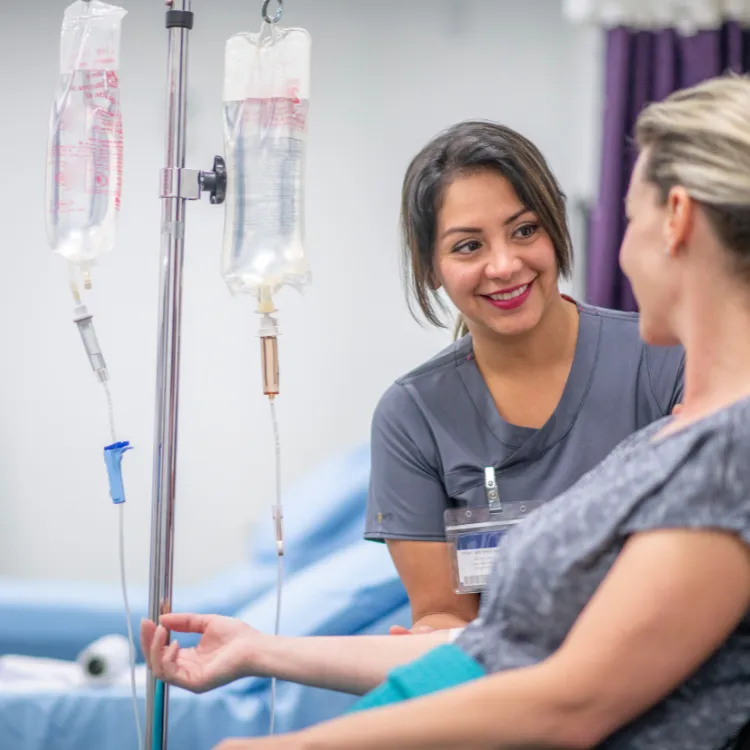
Interest in IV treatments, recovery and preventive health has grown significantly in recent years. Two treatments that have become increasingly popular are NAD+ and glutathione. Both are usually given as intravenous infusions (IV drips) and are used to support health, recovery and wellbeing – but they work in different ways in the body.
So which treatment suits you best?
The answer depends on your goals. Do you want to support the body's energy production, improve recovery, give your skin more glow or strengthen the body's natural antioxidant defence?
In this post, we go through what NAD+ and glutathione are, how the treatments work, the most important differences and how you can decide which treatment best suits your needs.
What is NAD+ treatment?
NAD+ (nicotinamide adenine dinucleotide) is a coenzyme found naturally in all the body's cells. It plays a crucial role in the production of ATP – the energy that powers the body's cells.
NAD+ is especially important for the mitochondria, often called the cells' “power stations”. The mitochondria convert nutrients into the energy the body needs to function normally. As we get older, the body's natural NAD+ levels decrease, which has led to growing scientific interest in treatments that aim to support normal cell function.
At many clinics, NAD+ is usually given as an intravenous infusion (IV drip), which means the treatment is delivered directly into the bloodstream.
NAD+ treatment is often associated with:
- Cellular energy production
- Mental clarity and concentration
- Recovery after intense periods
- Healthy ageing
- Increased wellbeing and vitality
Research on NAD+ is continuously developing and individual experiences can vary. The treatment should always be seen as a complement to a healthy lifestyle.
What is glutathione treatment?
Glutathione is one of the body's most important antioxidants and is produced naturally in the liver. Its main job is to protect the body's cells against oxidative stress by neutralising free radicals formed during normal metabolism and through exposure to, for example, UV radiation, air pollution and other environmental factors.
Glutathione also plays an important role in the body's natural detoxification processes by supporting the liver's work in processing and eliminating certain waste products.
Like NAD+, glutathione is usually given as an intravenous infusion (IV drip), although the treatment plan can vary depending on the clinic and individual needs.
Glutathione is often associated with:
- Skin with more glow
- Antioxidant protection
- Recovery after physical activity
- The body's natural detoxification processes
- General wellbeing
Results vary from person to person, and the treatment does not replace a good diet, regular exercise or other healthy habits.
NAD+ or glutathione – what is the difference?
Even though both treatments aim to support the body's functions, they have different focus areas.
| NAD+ treatment | Glutathione treatment |
| Supports cellular energy production (ATP) | Supports the body's antioxidant defence |
| Contributes to normal mitochondrial function | Protects cells against oxidative stress |
| Often associated with energy, focus and recovery | Often associated with skin health and antioxidant protection |
| Focus on cellular vitality | Focus on cell protection and the body's natural detoxification processes |
The treatments complement rather than replace each other, and the choice depends on your individual goals.
Which IV treatment suits your goals?
Your goals are an important starting point when choosing a treatment.
NAD+ may be an option if you want to focus on:
- Energy in everyday life
- Mental clarity and concentration
- Recovery after stress or intense periods
- Healthy ageing
- Cellular energy production
Glutathione may be an option if you want to focus on:
- Skin glow
- Antioxidant protection
- Recovery after training
- The body's natural detoxification processes
- Protecting cells against oxidative stress
Which treatment is most suitable depends on your goals, your lifestyle and your individual circumstances.
Can NAD+ and glutathione be combined?
Yes, in some cases.
As NAD+ and glutathione affect different biological processes, they can complement each other. NAD+ mainly supports cellular energy metabolism, while glutathione contributes to the body's antioxidant defence and helps protect cells against oxidative stress.
For some people, a combination of the treatments can be an option, depending on individual goals and a professional assessment.
Why do many people choose Nordic Skin Klinik?
Choosing the right clinic is just as important as choosing the right treatment.
At Nordic Skin Klinik, every treatment starts with a thorough consultation focused on your goals, needs and circumstances. Instead of standardised solutions, each treatment plan is designed individually to suit you.
The clinic works with high-quality products, evidence-based treatment methods and a strong focus on safety. Through its close link to Nordic Skin Academy, the team continuously develops its expertise and keeps up to date with the latest developments in aesthetic medicine and modern health treatments.
Whether you are interested in NAD+, glutathione or other treatments, you get professional guidance to find a solution that suits your goals.
Frequently asked questions (FAQ)
1. What is the biggest difference between NAD+ and glutathione?
NAD+ is a coenzyme that supports cellular energy production and the normal function of the mitochondria. Glutathione is a powerful antioxidant that helps protect cells against oxidative stress and supports the body's natural detoxification processes.
2. Are NAD+ and glutathione given as IV drips?
Yes. At many clinics, both NAD+ and glutathione are usually given as intravenous infusions (IV drips). However, how the treatment is performed can vary depending on the clinic and individual needs.
3. Which treatment is best if I want more energy?
NAD+ is often associated with cellular energy production and is therefore chosen by many people who want to focus on energy, recovery and mental clarity.
4. Is glutathione good for the skin?
Glutathione is an antioxidant often used by people who want to support their skin's glow and protect cells against oxidative stress. Experiences and results can vary between individuals.
5. Can I combine NAD+ and glutathione?
Yes, in some cases. As the treatments have different functions, they can complement each other as part of an individually tailored treatment plan.
6. How do I know which treatment suits me?
It depends on your goals, your lifestyle and your individual circumstances. A professional consultation helps you decide which treatment is most suitable.
7. Why do many people choose Nordic Skin Klinik for IV treatments?
Nordic Skin Klinik combines medical expertise, individually tailored treatment plans, evidence-based methods and a strong focus on quality and safety. Through its link to Nordic Skin Academy, the clinic's expertise is continuously developed to offer modern, high-quality treatments.