
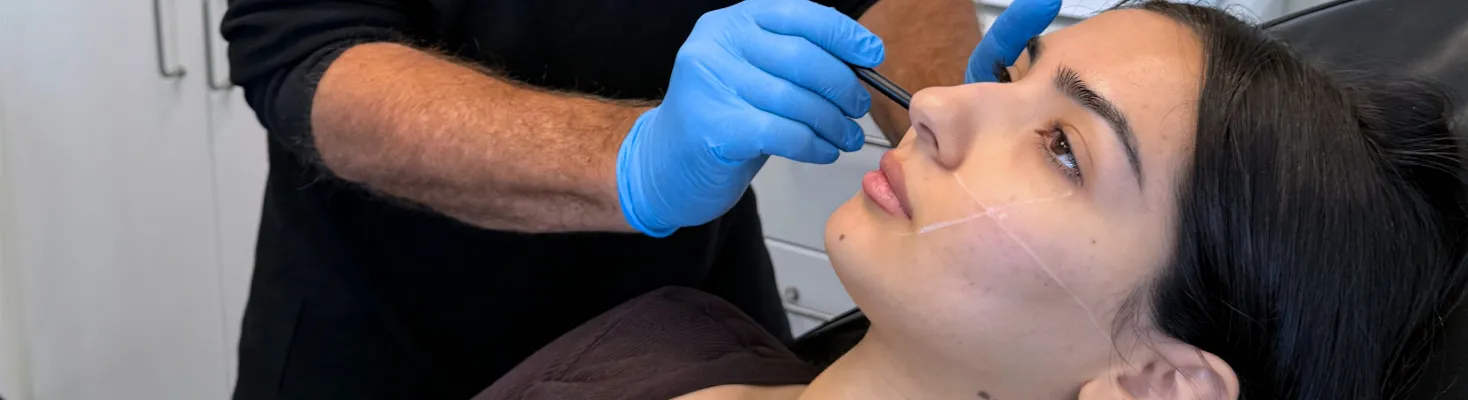
Do fillers hurt? It is one of the most common questions before a dermal filler treatment. And it is a perfectly reasonable question – especially if it is the first time you are considering fillers.
The experience of pain can vary depending on the treatment area, technique, product and individual sensitivity. But how does a filler treatment actually feel before, during and after?
Do fillers hurt?
For most people, a filler treatment is more associated with pressure, pricks and brief discomfort than strong pain. Many filler products also contain lidocaine, a local anaesthetic that can help make the treatment more comfortable.
However, the feeling can differ depending on where the treatment is performed. The lips, for example, can feel different from treatment of the jawline, cheeks or chin.
Your own pain sensitivity also plays a part.
Before the treatment – what can you expect?
Before the filler treatment starts, the area to be treated is assessed. The practitioner goes through your wishes and assesses the condition of the skin and tissue, among other things.
It is also a good time to say if you are worried about pain or discomfort.
Depending on the treatment area and method, different forms of anaesthetic or pain relief can be used to make the treatment as comfortable as possible.
During the filler treatment – how does it feel?
When the treatment starts, you may feel a short prick when the needle or cannula is inserted. After that, you may feel some pressure or a tight sensation as the filler is placed in the tissue.
Some areas are more sensitive than others. The lips, for example, are an area where many people feel more, while other parts of the face can feel less sensitive.
The treatment itself is usually relatively short, but the time varies depending on the area and the treatment plan.
After the treatment – is it tender?
It is common for the treated area to feel tender, swollen or sensitive for the first period after the treatment. Small bruises or redness may also occur.
This is part of the normal reaction after an injection treatment and usually fades gradually.
It is important to follow the aftercare advice you get from your practitioner. If you have unusual or severe symptoms, always contact the clinic or seek medical advice.
Do some filler treatments hurt more than others?
Yes, the experience can vary depending on the area being treated.
Lip fillers, for example, can be felt more because of the sensitivity of the area. Treatments such as cheek fillers, chin fillers and jawline fillers can feel different because the anatomy and treatment technique differ.
It is therefore not possible to say exactly how a filler treatment will feel for everyone.
What affects how the treatment feels?
Several factors can affect the experience:
- Treatment area
- Individual pain sensitivity
- Needle or cannula technique
- Which filler product is used
- Anaesthetic and preparation
- How extensive the treatment is
An experienced practitioner can also adapt the technique to the area and the client's circumstances.
Fillers are not only about pain
It is easy to focus on whether fillers hurt, but a safe filler treatment is about much more than the prick itself. Anatomical knowledge, the right product, correct technique and a professional assessment are central parts of the treatment.
The goal should be a result that suits the proportions of the face and your individual wishes – not to change more than necessary.
Fillers at Nordic Skin Klinik
At Nordic Skin Klinik, we offer several types of filler treatments for different areas and aesthetic goals, including lips, cheeks, chin, jawline and profile balancing. As both the technique and the treatment area affect the experience, the treatment is adapted to the client's needs and wishes.
A consultation before the treatment gives you the chance to go through your expectations, the treatment area and what you can expect before, during and after your filler treatment.