
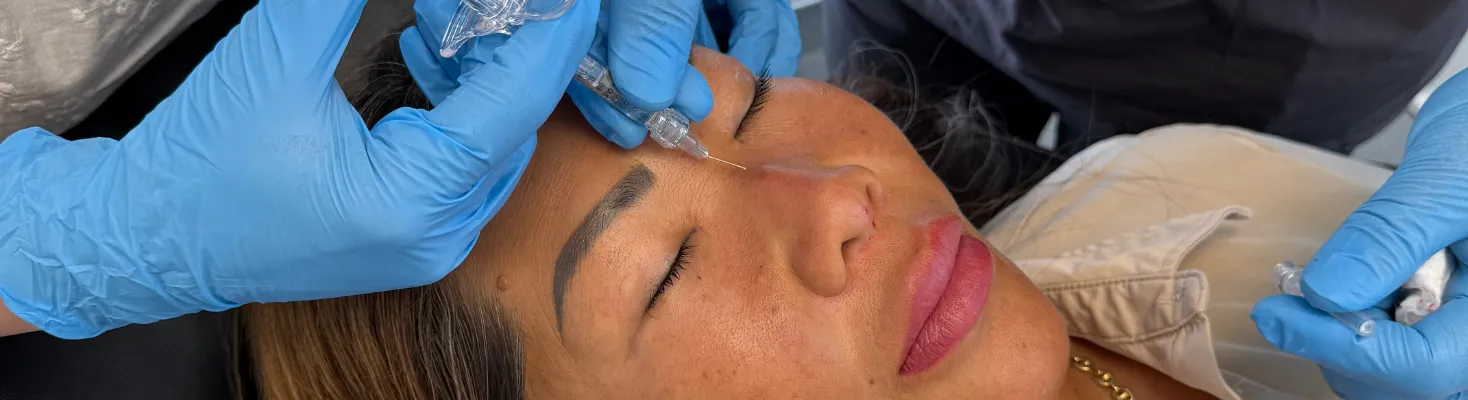
If you want to reduce wrinkles or change the shape of your face, Botox and fillers are two of the most common treatments you will come across. But they work in completely different ways.
Botox is used mainly for wrinkles caused by repeated muscle activity, while fillers can restore lost volume, enhance contours and fill certain lines and folds. That is why the choice is not about which treatment is “best”, but about what is causing the thing you want to change.
What is the difference between Botox and fillers?
The biggest difference is what the treatment affects.
Botox contains botulinum toxin and works by temporarily reducing activity in selected muscles. When the muscles move less, dynamic wrinkles can become less visible. It is used for frown lines between the eyebrows, forehead lines and crow's feet, among other things.
Fillers are gel-based materials injected into or under the skin to restore or add volume. They can be used, for example, for the lips, cheekbones, chin, jawline or areas where volume loss has made the face look more sunken. Results and longevity vary depending on the type of filler used and the area treated.
When is Botox the best fit?
Botox is mainly relevant when wrinkles are linked to muscle movement.
This could be, for example:
- Wrinkles between the eyebrows
- Horizontal forehead lines
- Crow's feet around the eyes
- Other dynamic lines that become more visible when the face moves
The goal of a Botox treatment is not to fill the skin, but to reduce the muscle activity that contributes to certain wrinkles.
When are fillers a better fit?
Fillers can be more relevant when it is mainly about volume, proportions or facial contours.
They can be used to, among other things:
- Restore volume that has decreased over time
- Enhance the cheekbones or chin
- Improve the shape and volume of the lips
- Define the contour of the jawline
- Reduce the visibility of certain deeper folds and hollows
Unlike botulinum toxin, fillers therefore work mainly by adding volume or structure.
Botox for wrinkles – fillers for face shape?
It is a simplification, but it can be useful as a starting point.
If the main concern is wrinkles caused by muscle activity, Botox may be relevant.
If it is instead about volume loss, proportions or facial contour, fillers may be more relevant.
At the same time, the areas of use overlap. A person may, for example, have both dynamic wrinkles and volume loss, which means different treatments can be part of the same individually tailored treatment plan.
Can Botox and fillers be combined?
Yes, in some cases Botox and fillers can be combined because they work in different ways.
A treatment plan could, for example, focus on reducing muscle-related wrinkles with botulinum toxin while restoring volume or defining facial contours with fillers.
However, this does not mean both treatments are needed. Which combination is suitable depends on the anatomy of the face, the condition of the skin and the result you want to achieve.
What should you consider before Botox or fillers?
Both Botox and fillers are medical injection treatments and should be performed by a qualified practitioner with good knowledge of facial anatomy. An individual assessment is important to decide which treatment suits the area and the goal.
At Nordic Skin Klinik, treatments are based on each client's individual circumstances, where the choice between, for example, Botox and fillers can depend on whether the focus is on muscle-related wrinkles, volume, proportions or facial contour.
With fillers, it is especially important to know about possible complications, as an injection into a blood vessel can in rare cases cause serious complications. That is why both the practitioner's expertise and a careful assessment before treatment are important parts of a safe treatment plan.
Frequently asked questions about Botox and fillers
1. Are Botox and fillers the same thing?
No. Botox contains botulinum toxin and temporarily reduces activity in selected muscles. Fillers add or restore volume and are used for contours, lips and certain lines or hollows, among other things.
2. What works best for forehead wrinkles – Botox or fillers?
If the forehead wrinkles are mainly dynamic and caused by muscle activity, botulinum toxin may be relevant. However, which treatment is suitable depends on how the wrinkles look and the individual features of the face.
3. Can fillers change the shape of the face?
Yes. Fillers can be used to add or restore volume and thereby affect, for example, the cheekbones, chin, lips or jawline.
4. Can Botox and fillers be combined?
In some cases, yes. As the treatments affect different aspects of the face's appearance, they can be combined when there is a clear treatment reason.
5. How long does Botox last?
The effect of botulinum toxin on facial wrinkles often lasts around 3–4 months, but individual variations occur.
6. How long do fillers last?
It varies depending on the filler, the treatment area and individual factors. Hyaluronic acid fillers, for example, often last around 4–12 months, but different fillers can have significantly different longevity.
7. How do I know if Botox or fillers suit me?
It depends on what you want to change. Wrinkles linked to muscle activity and volume loss or facial contour require different approaches. An individual consultation can help determine which treatment is most relevant for your circumstances.