
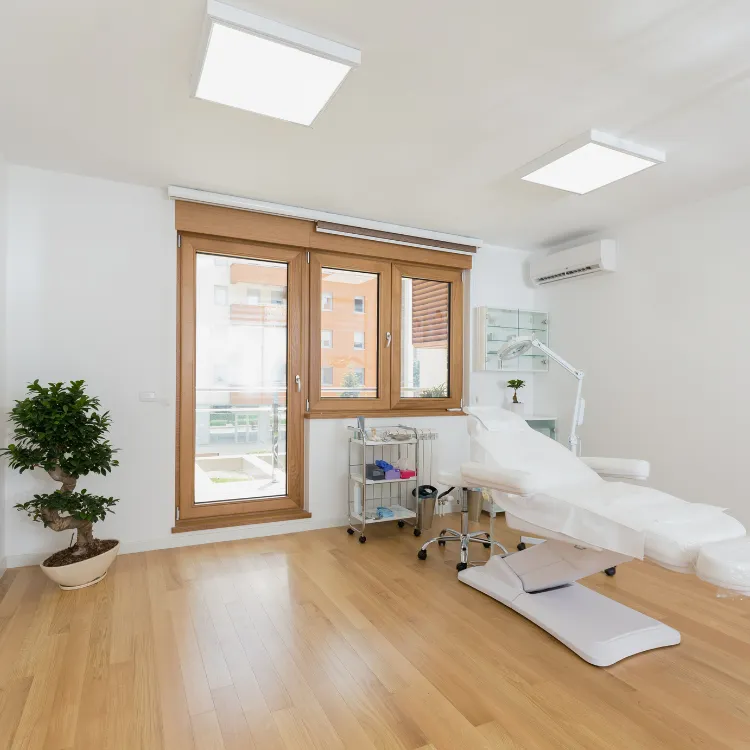
Interest in starting your own beauty studio at home has grown strongly in Sweden in recent years. Many want to work with lashes, brows and skincare on a smaller scale, build a loyal client base and have the flexibility of running their own business.
But it is essential to understand where the line goes between cosmetic work and healthcare. Swedish law is clear – and it draws a sharp distinction between superficial beauty treatments and medical procedures such as injections.
This guide explains what you are allowed to do in a home studio and when a medical aesthetic clinic is a legal requirement.
What counts as a beauty studio at home?
A home studio is a business run in your home or in separate premises on the same property. As long as the treatments are cosmetic and not classed as healthcare, you may work without a licence.
Typical treatments in a home studio are lash extensions, lash lift, brow lift, waxing, spray tan and simpler facials. These work on the surface of the skin and do not normally involve medical risks if carried out correctly.
However, this does not mean the business is unregulated. If you carry out hygienic treatments that may involve a risk of blood-borne infection – for example microneedling or treatments that penetrate the skin superficially – you may need to notify the municipal environmental office under the Environmental Code.
You are also responsible for:
- Good hygiene and written routines
- A self-monitoring programme
- Safe waste handling
- Liability insurance
Running a beauty salon at home is therefore entirely possible – but it is a business with responsibilities.
When does a treatment become medical?
The decisive line is injections.
Under the Act (2021:363) on aesthetic surgical procedures and aesthetic injectable treatments, fillers and botulinum toxin (Botox) count as healthcare in Sweden.
This means the treatment may only be carried out by:
- A licensed doctor
- A licensed dentist
- A licensed nurse under delegation from a doctor
It is not allowed to carry out injectable treatments in a private home studio that is not a registered healthcare practice.
In addition, special requirements apply:
The patient must be at least 18 years old.
A cooling-off period of at least 48 hours is required before the first treatment.
The practice must be registered with the Health and Social Care Inspectorate (IVO).
These are not recommendations – they are legal requirements.
Why are the requirements so strict?
Injections are medical procedures because they penetrate the skin and affect tissue. Even though complications are rare, they can be serious.
Examples of risks are vascular occlusion (a blocked blood vessel), infection, allergic reaction or nerve damage. Such a situation requires medical expertise and sometimes urgent action.
A registered medical aesthetic clinic must therefore meet requirements for:
- Patient records
- Patient safety work
- Patient insurance
- Medical responsibility
- The ability to handle complications
This applies whether the practice is in Stockholm or in a smaller town.
The purpose of the law is to protect the patient.
What about laser and advanced treatments?
Laser is an area where there is often uncertainty. Some cosmetic laser treatments can be carried out outside healthcare, but stronger medical laser treatments are covered by special rules.
The Swedish Radiation Safety Authority sets requirements for how strong lasers may be used. If the treatment affects deeper skin layers or aims to treat medical conditions, it may be covered by healthcare legislation.
It is always the business owner's responsibility to make sure the treatment is not classed as healthcare.
If you are unsure, you should contact the municipality or IVO before offering the treatment.
A safe and legal business model
There is a professional way to work within the rules.
You can run a home studio focused on cosmetic treatments and at the same time work with a medical aesthetic clinic that is responsible for injections and other medical procedures.
This gives clear roles:
Home studio – relationship, service, regular cosmetic treatments.
Clinic – medical expertise, injections, advanced treatments.
The client feels safe. You reduce legal risk. The business becomes sustainable.
What happens if the law is not followed?
Carrying out injections without a licence or without being a registered healthcare provider can lead to a police report and prosecution. It can also mean liability for damages if a client is harmed.
The legislation was introduced to tackle rogue operators and raise patient safety in the fast-growing aesthetics industry.
That is why it is important never to push the boundaries.
Conclusion
Starting a beauty studio at home in Sweden is entirely allowed – as long as you stay within cosmetic treatments.
Injections such as fillers and Botox are medical procedures. They may not be carried out in a home setting and require licensed staff and registration with the Health and Social Care Inspectorate.
Following the law is not just a legal obligation – it is a matter of responsibility.