
What are skin whitening/lightening treatments?
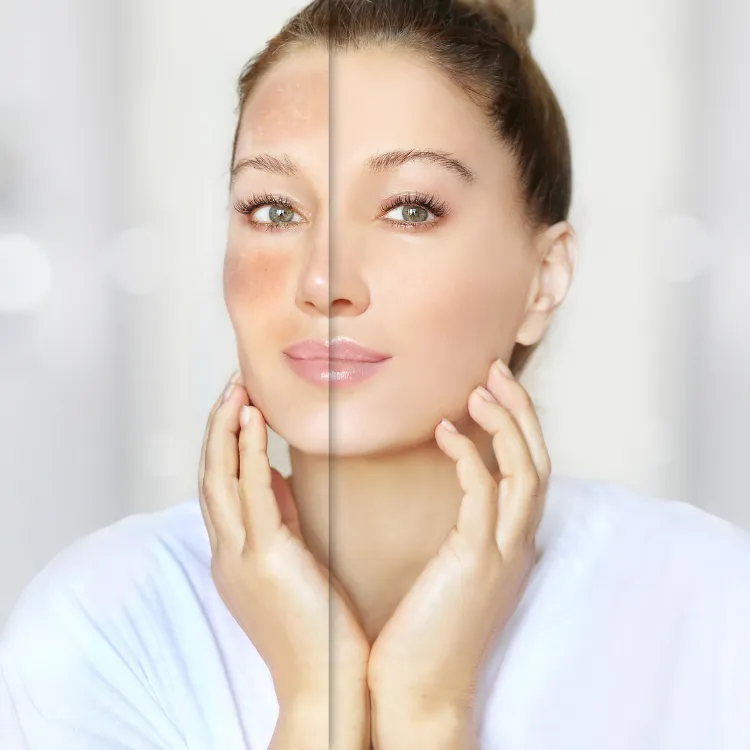
Skin whitening or skin lightening treatments cover various methods that aim to reduce melanin pigment in the skin. The skin can get a lighter, more even tone by inhibiting melanin production. The treatments can be applied to specific areas, such as age spots, or to the whole skin surface.
Popular skin lightening treatments and procedures
1. Topical solutions and creams
Skin lightening creams, sometimes called brightening creams, are applied to specific areas of skin or over the whole face. They reduce melanin production and result in a lighter skin tone. Some creams may contain substances that cause irritation or other problems, so professional guidance is recommended.
2. Chemical peel and exfoliation
A chemical peel involves using a special solution to remove the top layers of skin and stimulate the growth of new, lighter skin. This procedure can be effective for treating problems such as hyperpigmentation and age spots.
3. Laser and light therapy
Laser treatments and other light therapies use specific wavelengths of light to target and break down melanin. By reducing the presence of pigment, the skin can become lighter.
4. Microdermabrasion
Microdermabrasion is a non-surgical procedure that contributes to skin lightening by removing the top layers of skin and stimulating the growth of new, lighter skin.
5. Glutathione for skin lightening
Glutathione can be given through intravenous injections or applied topically to lighten the skin by several shades. It is known for evening out skin tone, treating pigmentation problems and reducing melanin production.
Who is a good candidate for skin whitening/lightening?
Skin lightening treatments are not suitable for everyone. A dermatologist or skincare specialist should assess the skin's specific condition, discuss possible benefits and drawbacks and recommend the best method for each individual.
Cost of skin lightening treatment
The cost can vary greatly depending on the type of treatment, the provider, the location and other factors. It is important to consult a specialist to get an accurate price estimate.
Are there any risks or safety issues with skin lightening?
Safety and effectiveness vary between different treatments. It is important to follow guidelines and protocols to minimise negative effects. Some treatments may involve long-term risks, so professional supervision is always necessary.
Frequently asked questions about skin lightening
Is skin lightening safe?
Skin lightening is generally safe when carried out by experienced specialists using approved methods and products. However, some treatments can involve risks if they are not carried out correctly.
Is skin lightening permanent?
How permanent the result is depends on the method and skin type. Some results can be long-lasting, while others may need maintenance treatments.
Are there any side effects?
Yes, side effects can include skin irritation, discolouration or other problems, especially if the treatment contains potentially harmful substances or is carried out incorrectly. That is why a consultation with healthcare staff before treatment is recommended.
How long does recovery take?
Recovery varies depending on the treatment. Topical creams usually require no or minimal recovery, while more invasive procedures such as laser may need longer for the skin to heal.
Who is not suitable for the treatment?
Suitability depends on skin type, medical history and individual skin problems. It is important to consult a skincare specialist to decide whether the treatment is suitable. Some people may need to avoid certain methods.