

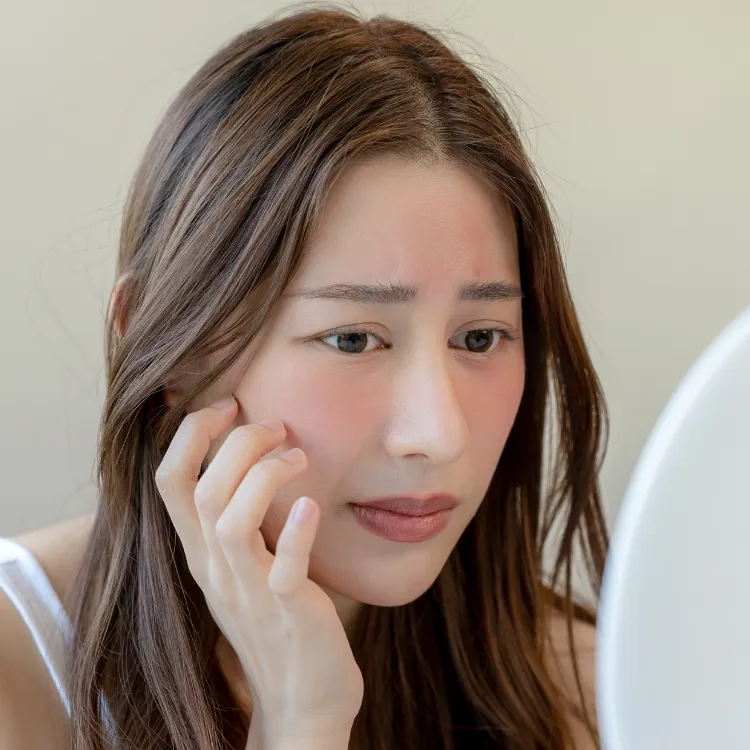
What is sensitive skin?
Sensitive skin is a common condition characterised by increased reactivity to various external factors, which leads to discomfort, redness, irritation and sometimes visible skin changes. People with sensitive skin often experience discomfort and irritation when exposed to triggers that do not affect people with a normal skin type.
Symptoms of sensitive skin
Redness: Sensitive skin often turns red, especially when exposed to temperature changes, certain skincare products or environmental factors.
Irritation: The skin can easily become irritated and cause discomfort, burning or a stinging sensation.
Dryness: Sensitive skin is often prone to dryness, which can lead to flaking, a rough surface and a tight feeling.
Itching: Itching is a common symptom, and people with sensitive skin may often feel the need to scratch or rub the skin.
Burning or stinging: Some people experience burning or stinging, especially on contact with certain products or environmental factors.
Tingling: A prickling or tingling sensation can occur even with a light touch or mild stimulus.
Rash: Sensitive skin can develop rashes, from small red bumps to raised, itchy areas.
Blotchiness: The skin can look uneven or blotchy, especially after exposure to temperature changes or stress.
Flushing: Sudden redness can occur with, for example, spicy food, alcohol or emotional stress, especially in people with rosacea-prone skin.
Allergic reactions: In some cases, sensitive skin can lead to allergic reactions such as hives (raised, itchy wheals) or contact dermatitis (a red, itchy rash on contact with an allergen).
Causes of sensitive skin
Environmental factors: Extreme temperatures (heat or cold), wind, humidity and pollution can make sensitivity worse.
Skincare products: Many people react to products that contain fragrance, alcohol, harsh chemicals or preservatives.
Allergens: Pollen, pet hair and dust mites can trigger skin reactions.
Cosmetics: Make-up and cosmetics with certain ingredients can cause irritation.
Fabrics: Materials such as wool or synthetic fibres can irritate the skin and cause itching or redness.
Food: Certain foods, especially spicy or acidic food, can in some cases trigger skin reactions.
Stress: Emotional stress and anxiety can make skin sensitivity worse and trigger flare-ups of conditions such as eczema or rosacea.
Genetics: Sensitive skin can be hereditary and run in families.
It is important to note that sensitive skin is subjective, and triggers vary from person to person. Sensitive skin can also be linked to specific skin diseases such as:
- Rosacea: A chronic skin disease that causes redness, flushing and visible blood vessels on the face.
- Eczema (dermatitis): A condition that causes dry, itchy and inflamed skin.
- Contact dermatitis: An allergic reaction or irritation on contact with certain substances.
Treatment options for sensitive skin
Treatment depends on the underlying causes and specific symptoms.
A gentle skincare routine
- Use mild, fragrance-free and hypoallergenic cleansers, moisturisers and sunscreen.
- Avoid products with harsh chemicals, alcohol and fragrance.
- Choose products labelled for sensitive skin.
Moisturising
- Keep the skin well moisturised with a mild, hypoallergenic moisturiser.
Sun protection
- Use sunscreen with a high SPF.
- Choose physical (mineral-based) sunscreens with zinc oxide or titanium dioxide.
Avoid triggers
- Identify and avoid whatever makes your skin sensitivity worse.
Lifestyle changes
- Eat a balanced diet and drink enough water.
- Manage stress through meditation, writing or yoga.
- Get enough sleep and exercise regularly.
Prescription medicines
A dermatologist can prescribe topical or oral medicines for severe problems or conditions such as eczema or rosacea. These can include:
- Corticosteroids
- Immunomodulating medicines
- Antibiotics
Topical steroids
Low-potency cortisone creams can be prescribed for short-term relief of itching and inflammation.
Prescription creams
For example metronidazole or azelaic acid for rosacea.
Light treatment (phototherapy)
May be recommended for certain skin diseases such as psoriasis.
Stress management
Talking therapy or stress management techniques can be helpful if stress contributes to the problems.
When should you seek professional help?
If your skin sensitivity is severe or long-lasting, you should contact a dermatologist for an assessment and an individual treatment plan.
Managing sensitive skin often requires patience and trial and error to find the right products and routines.
Preventive measures
- Do a patch test before you try new skincare products.
- Use mild, fragrance-free and hypoallergenic products.
- Limit the number of skincare products.
- Use sunscreen with a high SPF.
- Avoid hot water when showering and bathing.
- Choose soft, natural materials in clothing.
- Use hypoallergenic laundry detergent.
- Maintain a balanced diet and good hydration.
- Manage stress with relaxation techniques.
- Protect your skin from harsh weather.
- Contact a dermatologist if problems are severe or persistent.
Natural home remedies and self-care
Natural methods can help soothe sensitive skin, but it is important to always do a patch test first.
Oatmeal bath: Colloidal oatmeal can soothe irritated and inflamed skin. Add finely ground oats to your bath water or make a paste.
Cucumber: Cucumber slices have a cooling effect and can reduce redness.
Coconut oil: Extra virgin coconut oil can moisturise and strengthen the skin barrier.
Honey: Raw, organic honey has antibacterial and moisturising properties.
Cotton clothing: Wear loose-fitting clothes in natural materials.
Gentle cleansing: Use a mild, fragrance-free cleanser and pat the skin dry gently.
Cold compress: Can reduce redness and discomfort.
Aloe vera: Has soothing and anti-inflammatory properties.
Avoid hot baths and showers: Hot water can dry out the skin.
Fluid intake: Enough water supports the skin's protective barrier.
Frequently asked questions about sensitive skin
What are the four types of sensitive skin?
- Sensitive skin with redness (rosacea-prone)
- Sensitive skin with dryness (xerosis-prone)
- Sensitive skin with burning/stinging (neurosensitive skin)
- Allergic contact dermatitis
What causes sudden skin sensitivity?
- Environmental changes
- Harsh skincare products
- Stress or medicines
- Dietary factors
- Allergic reactions
- Sunburn
- Hormonal changes
Can stress cause skin sensitivity?
Yes, stress can make skin sensitivity worse and trigger flare-ups of existing skin conditions.
What is the difference between skin sensitivity and allergy?
Skin sensitivity is a general increased reactivity without necessarily an immune reaction. An allergy involves a specific reaction from the immune system to a particular allergen.
How is sensitive skin diagnosed?
There is no specific test. Diagnosis is made through a medical assessment, medical history and by identifying symptoms and triggers, often by a dermatologist.