
Hyperpigmentation is a common condition where certain areas of the skin become darker than the surrounding skin. The term covers several conditions characterised by increased pigmentation in the skin, and many of them can look very similar. That is why it is important to identify the exact condition to give effective treatment. Both men and women can be affected, but it seems to be more common in women, which may be due to hormonal changes.
What is hyperpigmentation?
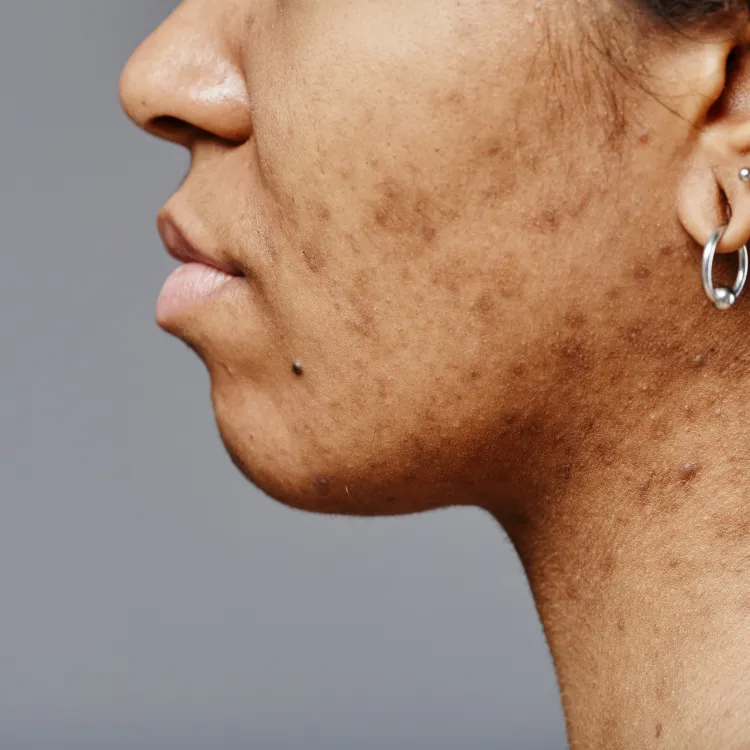
Hyper means more and pigment means colour. When an area of skin is darker than the surrounding skin, it is called hyperpigmentation. It happens because of increased production of melanin in a specific area. It can appear as brown, black or grey spots. Hyperpigmentation can be local, such as freckles, melasma and lentigo, or generalised and affect larger parts of the skin.
Causes of hyperpigmentation
Many factors can lead to hyperpigmentation, including:
Genetics
Sun exposure
Hormonal changes, for example pregnancy, contraceptive pills or a hormonal IUD
Thyroid diseases
Adrenal diseases and Addison's disease
Medicines that cause light sensitivity, for example tetracyclines
Skin diseases, for example acne and dermatitis
Skin injuries, for example scratches and burns
Vitamin deficiency, for example B9 and B12
Common types of hyperpigmentation
Age spots
Also called lentigo. These spots usually appear after the age of 35 and are often caused by repeated sun exposure. Laser is often the first choice for treating these spots.
Melasma
This condition usually appears on the face. It is sometimes called the mask of pregnancy because it can be triggered by hormonal changes during pregnancy. Melasma can last for several years if it is not treated.
Post-inflammatory hyperpigmentation
Also called PIH, it occurs more often in people with darker skin types when the skin has been irritated, inflamed or burned. Acne, dermatitis and lichen planus are common causes of PIH.
Treatment options for hyperpigmentation
Treatment of hyperpigmentation depends on several factors such as diagnosis, skin type and previous treatments. Combining different treatment methods can increase the success rate, as no single treatment guarantees a full effect. Available treatment options include:
Topical creams with hydroquinone, vitamin C, tretinoin, azelaic acid, arbutin, kojic acid and more
Chemical peel
Mesotherapy
Intense pulsed light (IPL/BBL)
Laser treatment
Home remedies for hyperpigmentation
There are several methods that can help treat hyperpigmentation at home. Topical application of apple cider vinegar, aloe vera, green tea, turmeric, liquorice, orchid extract and tomato paste are some options that have shown positive results.
Preventing and managing hyperpigmentation
Careful sun protection and long-term treatment are essential for good results. In addition, patience, consistent treatment and following preventive and medical recommendations play a very important role in a successful treatment result.
Frequently asked questions about hyperpigmentation
Does hyperpigmentation go away?
Yes, in some cases hyperpigmentation can fade or disappear, but not always completely. The result depends on several factors and everyone responds differently to treatment.
What triggers hyperpigmentation?
Sun exposure, hormonal changes, vitamin deficiency and friction or rubbing can make hyperpigmentation worse.
How do you get rid of hyperpigmentation?
Treatment starts with identifying the underlying cause of the dark areas of skin. When the cause is treated, many spots can fade naturally and the risk of new spots is reduced. Sun protection is essential for good results. Choosing the right treatment based on a correct diagnosis is also important to reduce or eliminate hyperpigmentation.