

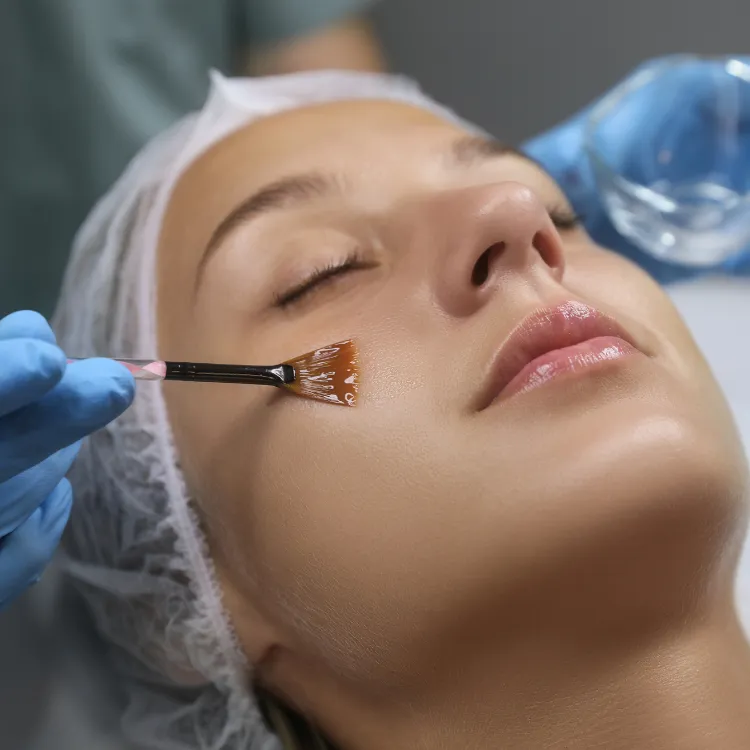
What is a chemical peel?
A chemical peel involves applying a special solution to the skin, which exfoliates the upper layer of the skin. As the skin regenerates, it gets a smoother, more refined appearance. These treatments can help reduce wrinkles, acne scars, pigmentation changes and other skin irregularities.
The strength and results of the peel depend on which chemicals are used. Lighter chemical peels may need several sessions, while deeper chemical peels give more noticeable results but need a longer healing time.
Understanding chemical peels
Basically, a chemical peel is an aesthetic treatment where acids are used to remove the outermost layer of the skin. These acids make sure damaged skin cells are removed evenly across the treated area. When the treatment is carried out correctly, it promotes the skin's recovery with minimal risk of discolouration or scarring.
A chemical peel can affect the epidermis (the outermost skin layer) and to some extent the dermis beneath it. The dermis contains sweat glands, nerve endings and hair follicles. Most chemical peels focus on the epidermis, but stronger treatments can penetrate the upper part of the dermis.
Some common acids used in chemical peels include:
- Alpha hydroxy acids such as glycolic acid, lactic acid and citric acid
- Beta hydroxy acids, with salicylic acid as a common example
- Trichloroacetic acid, mainly used in medium-strength peels
- Phenol, used in the most intensive peels
Types of chemical peel
Light chemical peel
Focuses on the epidermis and treats minor skin problems and dryness. Can be done every 2–5 weeks.
Medium-depth chemical peel
Penetrates both the epidermis and parts of the dermis. Suits more noticeable skin problems and may need several sessions.
Deep chemical peel
Penetrates deeper into the skin and is used to treat serious problems such as deep wrinkles or precancerous skin changes. Usually one treatment is enough.
Benefits of chemical peels
These skin-improving treatments can help with problems such as:
- Acne
- Enlarged pores
- Scars
- Pigmentation changes
- Rough or dull skin
At the same time, the skin's texture and tone improve, which gives a smoother, fresher appearance.
Preparing for and carrying out a chemical peel
Preparation before treatment
Preparation may include:
- Avoiding the sun and tanning for two weeks before treatment
- Using skincare products prescribed by the practitioner
- Avoiding retinoids for one to two weeks before treatment
- Taking prescribed medicines 24 hours before the treatment
- Making sure the skin is free from infections and open wounds
Always follow any further instructions from your healthcare provider.
Detailed treatment process
- A healthcare specialist applies the chosen chemical solution using, for example, a brush or cotton.
- The skin may turn white during application.
- A warm feeling and slight stinging may occur for a short time.
- The chemical is neutralised or washed off.
Recovery guidelines after treatment
- The skin may react like sunburn and start to peel within 3–7 days.
- The skin should be kept moisturised and protected from the sun for at least two weeks after the treatment.
- Make-up can usually be used after one week.
Positive results of a chemical peel
- Improved skin smoothness and a more even skin tone
- Fewer wrinkles and fine lines
- Reduced sun damage
- Treatment of rough skin and a dull complexion
- Improved skin health overall
Possible side effects of a chemical peel
Most side effects are mild, but some may persist:
- Long-lasting redness
- Swelling or scabs
- Skin discolouration
- Rare scarring
- Possible infections, including cold sore outbreaks
It is important to consult a specialist and tell them about previous skin problems or treatments.
Frequently asked questions about chemical peels
How many chemical peel treatments are needed?
The result varies between light and medium-depth peels. Medium-depth peels can be done every 6–12 months, while lighter peels can be done every 2–5 weeks.
How does a chemical peel work?
The treatment uses chemicals to create controlled peeling of the skin, which reveals new, healthy skin underneath.
How often is a chemical peel needed?
Deeper peels are often done once, while lighter peels may need repeated treatments.