
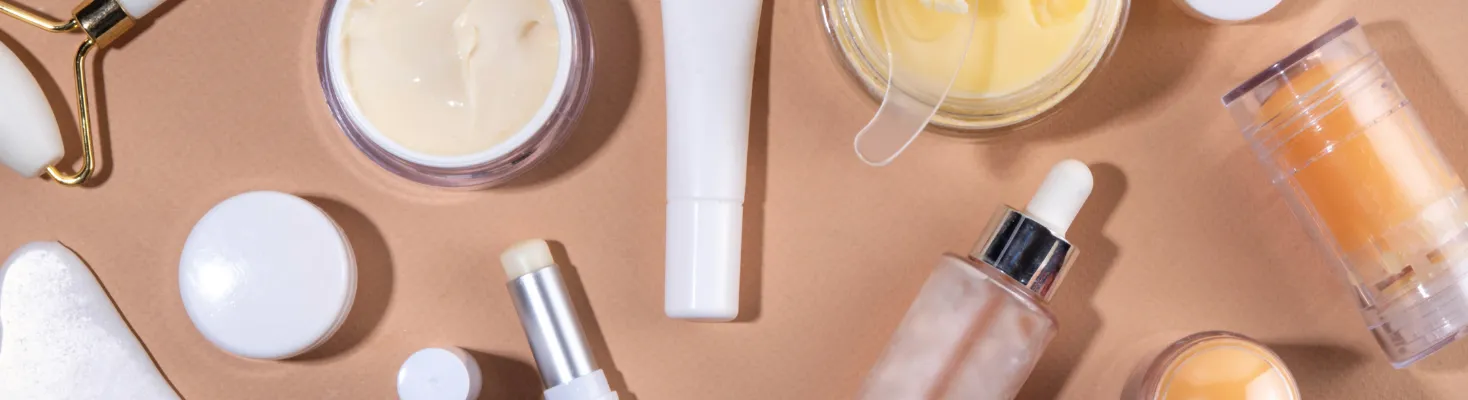
A well-thought-out skincare routine can help your skin feel better – but more products do not automatically mean better skin.
When several active ingredients, exfoliants and treatments are combined without enough recovery, the skin can become irritated and feel more sensitive than before. In some cases, this can affect the function of the skin barrier.
So how do you know if your skin is actually getting too much?
What is the skin barrier?
The skin barrier is the skin's outermost protective layer and helps, among other things, to retain moisture and protect against external influences.
Lipids such as ceramides, cholesterol and free fatty acids play an important role in the structure of the barrier and its ability to reduce water loss from the skin. When the barrier function is impaired, the skin can become drier and more prone to irritation.
Can too much skincare damage the skin barrier?
Yes, especially if the skin is regularly exposed to more irritation than it has time to recover from.
This could mean, for example, using several exfoliating products at the same time, exfoliating too often or combining strong active ingredients without considering how the skin reacts.
Dermatologists especially warn against over-exfoliation. When exfoliating products are used too often, the skin can become red and irritated and the protective barrier can be affected.
This does not mean that ingredients such as acids or retinoids are bad for the skin. The problem may rather be how often they are used, how they are combined and how much the skin tolerates.
6 signs your skin is getting too much
The skin can react in different ways when the skincare routine becomes too intense. Common signs are:
1. Your skin stings when you apply products
If products that usually feel mild suddenly start to sting or burn, it can be a sign of irritation.
2. Your skin becomes red and sensitive
Redness that appears more easily than usual or does not fade quickly can indicate that the skin is overloaded or irritated.
3. Your skin feels tight and dry
A tight feeling after cleansing or during the day can be a sign that the skin needs more hydration and less irritation.
4. You start reacting to products you used to tolerate
When the skin barrier is weakened, the skin can become more sensitive, and products that used to work well can suddenly irritate.
5. Your skin flakes or becomes unusually dry
Dryness and flaking can occur when the skin is exposed to too much exfoliation or other irritating factors.
6. Your skin feels both dry and gets more breakouts
Irritation and dehydration can sometimes make the skin harder to balance. That does not automatically mean the skin needs even more products – sometimes the opposite is more helpful.
Which products can become too much?
It is above all the combination of several active products that can become problematic.
Examples are:
- AHA and BHA acids
- Retinol and other retinoids
- Strong exfoliating products
- Mechanical scrubs
- Products that already contain several exfoliating ingredients
Using an active ingredient does not automatically mean the skin barrier is damaged. It is about dose, frequency, combinations and the skin's individual tolerance.
The AAD, for example, recommends being careful with exfoliation if you already use products that can make the skin more sensitive, such as retinol or benzoyl peroxide.
What can you do if your skin feels overloaded?
When your skin is irritated, you do not need to try to solve the problem with even more products.
A simpler routine can be more suitable for a while:
Morning
- Gentle cleansing or just water, depending on skin type
- Moisturiser
- Sunscreen
Evening
- Gentle cleansing
- A simple, hydrating cream
Pause or cut back on things that clearly irritate the skin, especially strong exfoliation. When the skin feels stable again, active ingredients can be reintroduced gradually instead of going back to all products at once.
Ingredients such as ceramides can be useful in a hydrating routine as they are an important part of the skin's barrier lipids, and studies have shown that ceramide-based formulations can improve the skin's barrier function and reduce dryness.
How much skincare does the skin really need?
A good skincare routine does not need ten steps.
For many people, the basics are much simpler: gentle cleansing, hydration and daily sun protection, supplemented with active ingredients based on the skin's needs.
The most important thing is not how many products you use, but how your skin actually reacts to them.
If your skin feels tight, stings, turns red or suddenly reacts to products that used to work well, it may be time to simplify your routine and give your skin barrier time to recover.