

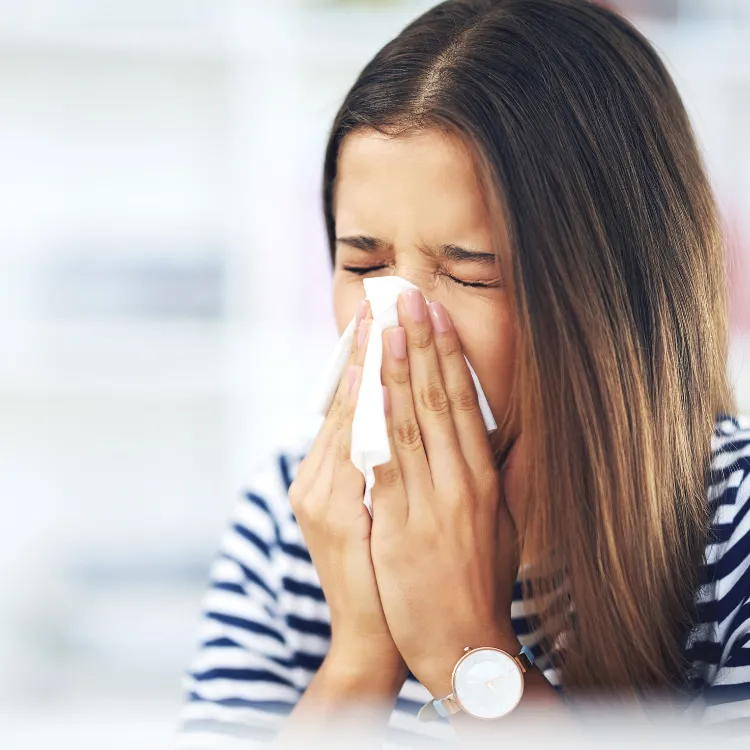
It is reported that 10% to 30% of the world's population suffer from allergies and intolerances. In the United Arab Emirates, at least 7% of residents are allergic to grass pollen, which causes allergic rhinitis and hay fever. Self-awareness and spreading information are fundamental to managing allergies from a public perspective.
What are allergies?
An allergy occurs when the body overreacts to foreign substances that are inhaled, injected or touched, which causes physical reactions. The substances that stimulate the immune system and cause allergic reactions are called allergens.
Symptoms of allergy
Allergic reactions can vary from person to person. The severity of symptoms can range from mild to severe. A life-threatening allergic condition is called anaphylaxis. Allergies can affect the airways, the digestive system, the skin and the sinuses.
An allergy can cause the following symptoms:
Skin allergy
- Rash
- Itching
- Redness
- Blisters
- Swelling
- Hives
Inhalation allergy
- Sneezing
- Runny nose
- Blocked nose
- Sinusitis
- Itchy throat
Eye allergy
- Swollen eyelids
- Burning sensation
- Blurred vision
- Watery eyes
Food allergy
- Abdominal pain
- Diarrhoea
- Nausea and vomiting
- Gas and bloating
Anaphylaxis
- Difficulty breathing
- Shortness of breath
- Drooling
- Fainting
- Severe swelling
Causes of allergies
Allergens are foreign substances that are usually harmless to many people. In some people, allergens mistakenly trigger an immune reaction that causes allergic reactions.
From a medical perspective, the immune system identifies the allergen as a dangerous substance or an intruder in the body. As a result, the body produces an antibody called immunoglobulin E to defend itself against the allergen, followed by the release of inflammatory chemicals such as histamine.
According to medical publications, the most common allergens are:
- Cow's milk and dairy products, including cheese, yoghurt and ice cream
- Eggs
- Tree nuts and peanuts
- Shellfish and fish
- Wheat and gluten
- Soy
- Certain medicines, such as penicillin and painkillers
Allergy tests – Diagnosing allergies
Careful diagnosis and identification of allergens are essential for effective management of allergies. Allergies can change over time; the body may become less sensitive to some allergens or grow out of them naturally.
It is strongly recommended to have an allergy test every year or at least every other year to check for allergen-specific immunoglobulin E antibodies. The most cost-effective and effective methods for allergy testing are blood tests and skin tests.
Allergy blood test
An allergy blood test is an effective method for allergy testing. It is a quick and simple method that can be ordered by a licensed doctor. The test can be carried out on patients regardless of age, severity of allergy, pregnancy or skin condition.
The test is done by taking a blood sample from the patient, which is then sent to a laboratory for analysis. The results are sent back within a few days. Several allergens can be detected with a single blood test without exposing the patient to allergens during the test. A licensed doctor interprets the results and designs a treatment plan.
Skin prick test
A skin prick test or puncture test is carried out by introducing small amounts of suspected allergens into the skin using lancets or small needles.
A qualified nurse makes several pricks, usually on the patient's forearm or back. The allergens are marked individually, and the specialist interprets the skin's reaction to each substance. If the patient is allergic, an inflammatory reaction in the form of a wheal or hives usually develops within 30 minutes of exposure.
The specialist continues to monitor the patient to rule out the risk of an anaphylactic reaction, which is a medical emergency. Unlike blood tests, this method involves direct exposure to allergens, which can cause a strong allergic reaction.
Epicutaneous test (patch test)
Patch tests are often used to detect delayed allergic reactions. Many dermatologists use this method to identify causes of skin allergies or contact allergies, such as dermatitis and eczema.
The test involves placing adhesive patches with suspected allergens on the patient's back, and the skin is observed for reactions over 2 to 3 days.
Treatment of allergies
Over-the-counter allergy medicines
Anti-allergy tablets or antihistamines can be bought without a prescription. However, it is recommended to get advice from a doctor or pharmacist. Over-the-counter medicines include:
- Antihistamines – Loratadine, Cetirizine and Benadryl
- Topical ointments – Betamethasone cream and topical steroids
- Nasal sprays – Clarispray and cromoglicate
- Decongestants – Phenylephrine and pseudoephedrine
Prescription treatment of allergies
Prescription medicines can be given in acute conditions such as anaphylactic shock. A severe allergic reaction can block the airways and cause a medical emergency.
Treatment includes an injection of adrenaline or an EpiPen. In an asthma attack, bronchodilators and other injections can be given.
Allergy vaccination and long-term solutions
Allergen immunotherapy or allergy vaccination is given to patients with severe allergic reactions to specific allergens.
The treatment involves a series of injections with purified allergen extracts or tablets placed under the tongue. The treatment can gradually increase the body's tolerance to the allergen and so reduce allergic reactions.
Home remedies for allergies
Home remedies can improve comfort and reduce symptoms, but self-medication should be avoided, especially with herbal medicine and alternative treatments. It is recommended to consult a doctor for correct treatment.
The following home remedies can reduce discomfort and symptoms:
- Nasal rinsing – Can improve breathing and clear the airways
- Essential oils – Some types may have antibacterial and anti-inflammatory properties
- A healthy diet – Bioflavonoids, vitamin C and zinc act as natural antihistamines
Preventive measures and precautions for allergies
Effective preventive measures depend on identifying allergens and a correct diagnosis. Avoiding allergens after diagnosis can reduce allergic reactions.
It is also important to take preventive measures such as:
- Always wearing a medical bracelet that lists your allergens
- Carrying oral antihistamines or an adrenaline injector if there is a risk of exposure
- Avoiding places where allergens are common, such as pet shops, gardens and florists
- Keeping a clean, dust-free home, especially bedding, curtains and rugs
- Using air purifiers and installing HEPA filters to reduce airborne allergens
Frequently asked questions about allergies
Can allergies be cured or only controlled?
There is currently no treatment that permanently cures allergies. However, there are advanced treatments that can help the body gradually increase its tolerance to specific allergens.
How can I find out what I am allergic to?
An allergy test is needed to identify different allergens. It can be done with a blood test or skin tests.What are the most common allergies?
Globally, shellfish is the most common allergen, followed by peanuts and tree nuts. Many people are also allergic to pollen and animal dander.