
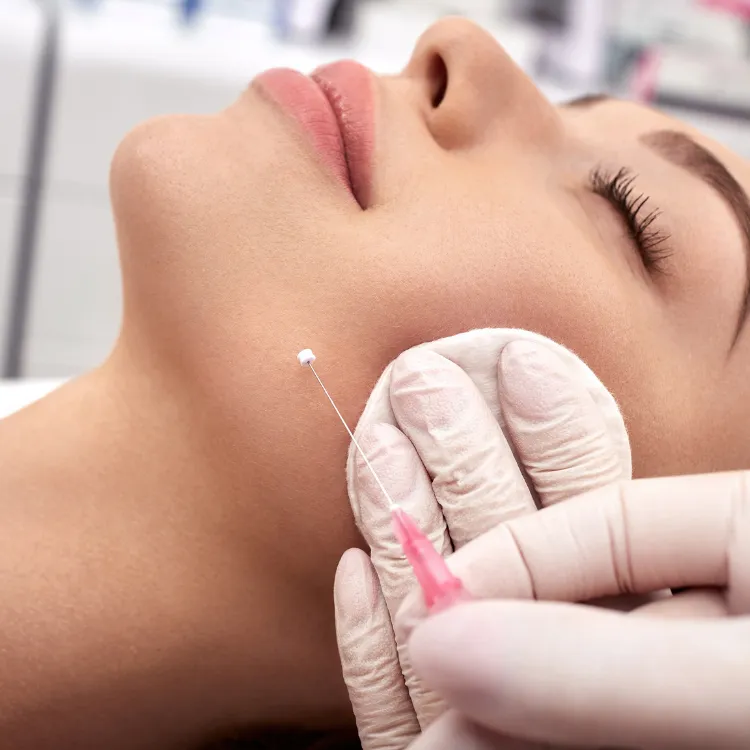
A modern treatment for anyone who wants to tighten the skin without surgery
Thread lifts have quickly become one of the most popular aesthetic treatments for people who want a more youthful, lifted appearance without surgery.
The treatment uses thin, biodegradable medical threads that are placed under the skin to lift the tissue while stimulating the body's natural collagen production.
For many clients, this means a treatment that can improve facial contours and skin elasticity and give a more natural lift.
In this guide we go through seven important things you should know about thread lifts before you consider the treatment.
1. What is a thread lift?
A thread lift is a non-surgical aesthetic treatment where thin medical threads are inserted under the skin to create a lift and improve the skin's structure.
The threads work by:
- giving the skin an immediate lift
- stimulating collagen production
- improving the skin's firmness and elasticity
Common treatment areas include:
- Jawline
- Cheeks
- Neck
- Eyebrows
- Nasolabial folds
2. How does the treatment work?
During the treatment, a medical professional places the threads under the skin using a fine needle or cannula.
The threads contain small structures that help lift and support the skin in a more lifted position.
The treatment usually takes between 30 and 60 minutes depending on the treatment area.
After the treatment, many clients experience:
- minimal recovery time
- mild swelling or bruising
- visible results straight after the procedure
3. The results improve over time
A big advantage of a thread lift is that the results are not just immediate – they can also improve over time.
This is because the threads stimulate the skin's natural collagen production, which can:
- make the skin firmer
- improve the skin's texture
- give longer-lasting and more natural results
4. How long do the results last?
The results of a thread lift can vary depending on several factors, for example:
- skin quality
- age
- lifestyle
- number of threads used
For many clients the results usually last between 12 and 18 months.
Even after the threads dissolve, the collagen that has formed continues to support the skin's structure.
5. Who is the treatment suitable for?
A thread lift is often suitable for people who:
- have mild to moderate skin laxity
- want to avoid surgery
- want to improve their facial contours
- want a natural result
It is important to first have a consultation with a qualified medical professional to decide whether the treatment is right for you.
6. Recovery and aftercare
After the treatment, some clients may experience:
- slight swelling
- small bruises
- mild tenderness in the treatment area
These symptoms are usually temporary and disappear within a few days.
Common aftercare recommendations include:
- avoiding intense exercise for a few days
- sleeping on your back for the first few nights
- avoiding facial massage for the first period
7. The importance of choosing the right clinic
Because a thread lift is a medical aesthetic treatment, it is important to choose a reputable clinic.
A safe clinic offers:
- treatment carried out by medical professionals
- high hygiene standards
- an individual consultation before treatment
A medical professional always makes a careful assessment of the skin's needs and explains both the benefits and any risks.
Frequently asked questions about thread lifts
1. Does a thread lift hurt?
Most clinics use local anaesthesia, which makes the treatment relatively comfortable. Some clients may feel slight pressure during the procedure.
2. When do you see results?
A lift can often be seen straight after the treatment, while the skin quality continues to improve over the following months.
3. Is a thread lift safe?
When the treatment is carried out by a qualified medical professional, it is generally considered safe.
4. Can a thread lift be combined with other treatments?
Yes, many clients combine a thread lift with other skin treatments to improve skin texture and facial contours.5. How long is the recovery time?
Most clients can return to their daily activities within 1–2 days, although mild swelling may occur for a short period.